Insights
Turnkey, Integrated, Seriously Snappy: Building with AtlasFeed in PrivateMind AI Workspaces
I'm stuck at home feeling a bit under the weather this week. The plus, I finally got a bit of time to do some development in PrivateMind AI Workspaces. The…
I'm stuck at home feeling a bit under the weather this week. The plus, I finally got a bit of time to do some development in PrivateMind AI Workspaces.
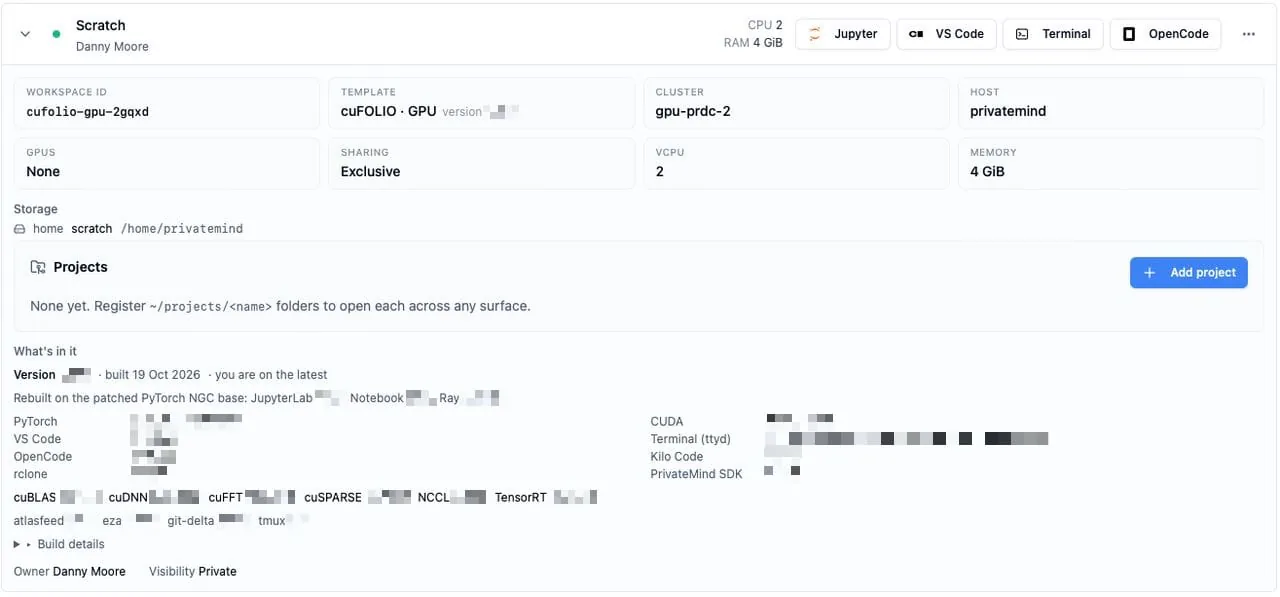
The first standout, I found the development platform really slick, turn key, worked straight out of the box. The workspace is essentially a dedicated Linux VM, with OpenCode, Juypter, a terminal and VS Code built in along with all the libraries Python, ML/PyTorch, Git integration, etc. Really slick the way they open up as separate bowser tabs, systems fully integrated.
The latest release has the AtlasFeed SDK built in as standard and API access. OpenCode was able to access the documentation and write me a simple script to pull real time and historical data. Got it right first time.
The user will need their AtlasFeed API credentials to access the data.. so the API functionality is available out of the box for all Options Technology AtlasFeed clients. Brings over 400 separate global data feeds into the dev environment, including historical data.
There has been a lot of noise lately about MCP for market data and we do have an AtlasFeed MCP connector for PrivateMind. My take is that this will be a passing phase as MCP isn't a great protocol for data. It effectively passes the data as text for the LLM to consume. Gets the job done, but slow, clunky and eats a lot of tokens. Much better have a skills.md file that lets the LLM hit the API directly, if it even needs to.
The other standout, the development with OpenCode was seriously snappy, the script was written in seconds, even though OpenCode was configured to hit GLM vs Kimi K3 or Meta Muse. Resonates with our general view that the harnesses are the defining innovation in 2026. The models themselves are already more than fit for purpose.
Want to see how this would work with your firm's data?